
| By SRUTHI GOPALAKRISHNAN |
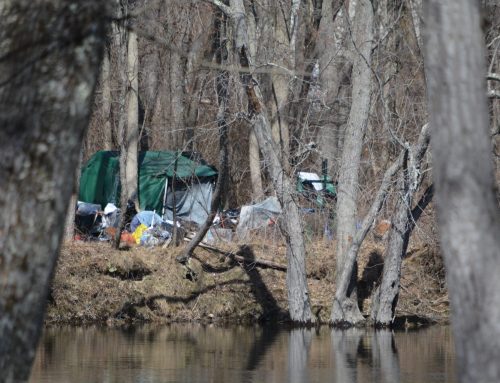
Outreach coordinators and mental health advocates in New Hampshire are evaluating the potential impact of a new executive order that makes it easier for states to clear homeless encampments and mandate mental health or addiction treatment
Titled “Ending Crime and Disorder on America’s Streets,” the executive order signed last week by President Donald Trump calls for expanded use of “civil commitment” for people experiencing homelessness who have mental illness, are unable to care for themselves, or are considered a danger to themselves or others.
If New Hampshire follows through, advocates worry the state’s already strained mental health system could buckle under the pressure.
Susan Stearns, executive director of the National Alliance on Mental Illness in New Hampshire, said that although the executive order was issued Thursday and its impacts are yet to be felt, one thing is clear – the state does not have enough treatment beds.
“We have a system that probably is just about reaching the point where we have the right number of beds for our current system,” said Stearns. ‘If you are going to suddenly say, if you’re unhoused, we’re going to involuntarily commit you, we don’t have enough hospital beds. We don’t have enough capacity in terms of workforce to make that happen immediately.”
Most unhoused individuals struggle with mental illness and often face substance use disorders—issues that can be a consequence of homelessness or that can lead to homelessness.
The number of people experiencing homelessness in New Hampshire on the night of an annual count rose sharply — from 1,605 in 2022 to 2,441 in 2023 — a 52% increase, according to a recent report by the New Hampshire Coalition to End Homelessness.
“Housing first,” a model hailed by many mental health experts as a crucial first step to improving overall health, safety, and stability, is also criticized by the executive order.
The order states that the housing first policy “deprioritizes accountability and fails to promote treatment, recovery, and self-sufficiency.”
But Stearns pushed back, saying that providing housing as quickly as possible to unhoused individuals has led to better mental health outcomes.
“If you’re going to ask someone to engage in treatment, whether it be for their mental health condition or substance misuse disorder, it’s a lot easier to do that if you have a safe place to sleep at night,” said Stearns. “If you are sleeping on the streets or in a tent or somewhere where you don’t feel safe, I think it’s a lot harder for folks to engage in treatment.”
“Harm reduction” programs — which aim to lessen the health and legal consequences of drug use — are also in the crosshairs of the order.
It directs the Substance Abuse and Mental Health Services Administration to pull funding from addiction programs that incorporate harm reduction strategies.
Lauren McGinley, executive director of the New Hampshire Harm Reduction Coalition, said not funding harm reduction can do more harm than good.
“Anytime there is a national statement made about a vetted evidence-based public health service like harm reduction, the unintended consequence can be that it adds to the stigma,” said McGinley. “Any type of forced medical treatment is not going to be successful and could end up damaging a lot of the great work that people have done over the last 20 years to make behavioral health care and behavioral health settings safe, evidence-based and effective.”
Sruthi Gopalakrishnan can be reached at sgopalakrishnan@cmonitor.com